The New Rules of College Admissions in the Age of Artificial Intelligence
AI didn't make college less important. It made choosing the right college — and the right strategy — vastly more important.
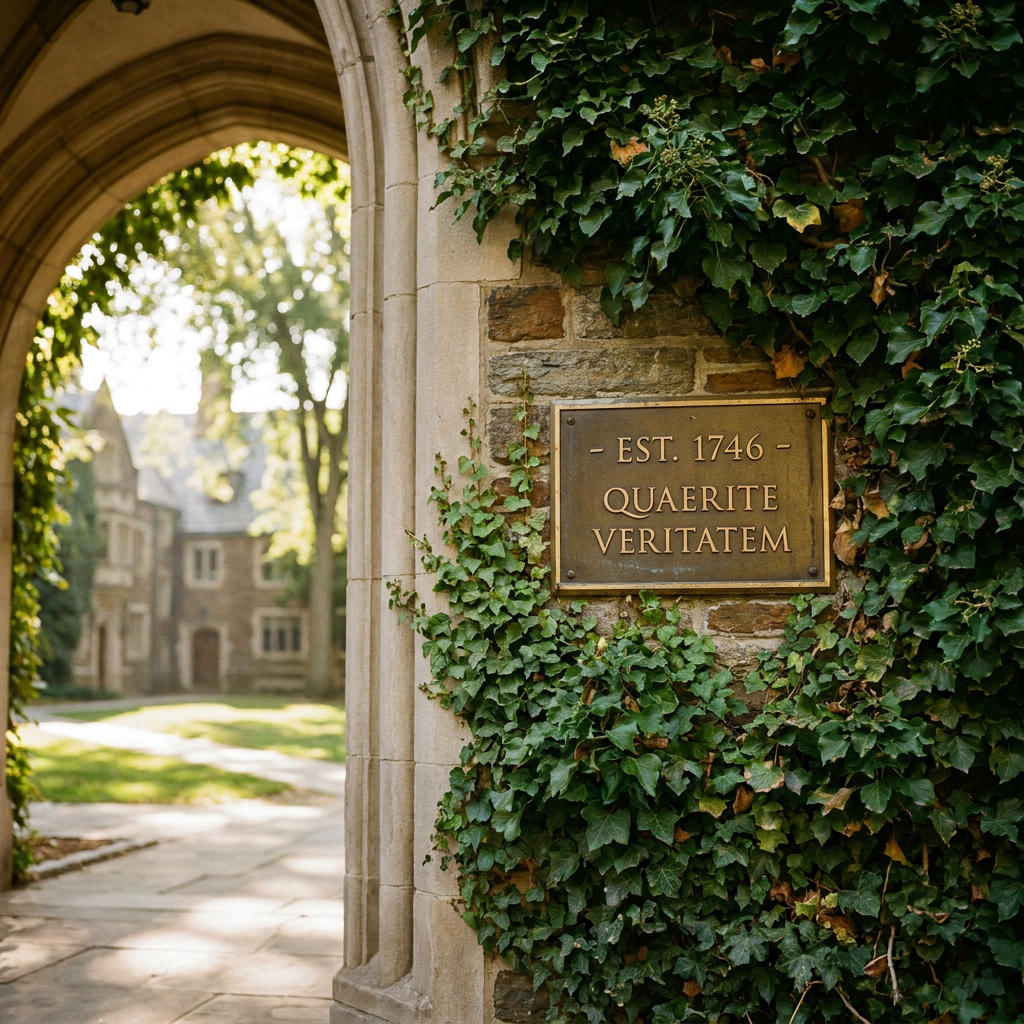
Every generation experiences a technological shift that changes the rules of success. My grandparents witnessed commercial aviation reshape the world. My parents saw the rise of personal computers. My generation watched the internet transform nearly every industry. Today's students are entering adulthood during the rise of artificial intelligence. And unlike previous technological revolutions, AI isn't changing just one profession. It's changing all of them.
The students entering college this fall will graduate into a workforce that looks fundamentally different from the one their parents entered. Many of the jobs they'll hold don't yet exist. Many routine tasks that once distinguished college graduates are already being automated. At the same time, entirely new opportunities are emerging for people who know how to combine human judgment with machine intelligence.
That's why I believe the college admissions conversation has fundamentally changed. Parents are still asking the wrong question. Instead of asking, "Which college has the highest ranking?" they should be asking, "Which college will best prepare my child to thrive in an AI-powered economy?" Those are not the same thing.
AI Didn't Make College Less Important; It Made Choosing the Right College More Important
Every few months someone confidently predicts that AI will eliminate the need for higher education. I disagree. If anything, AI has increased the value of education — but it has changed what education should accomplish.
The purpose of college is no longer to memorize information. Artificial intelligence can retrieve facts in seconds. The purpose of college is to learn how to think. How to analyze. How to evaluate evidence. How to communicate clearly. How to solve unfamiliar problems. How to collaborate with people from different backgrounds.
Those skills become more valuable — not less — as AI becomes more capable. The graduates who struggle won't necessarily be those with the least intelligence. They'll be the ones who mistake access to information for understanding.
Admissions Offices Are Already Adapting
Artificial intelligence has transformed the admissions process almost overnight. Students can now generate essays in minutes. Recommendation letters can be polished by AI. Resumes can be optimized automatically. Activity descriptions can be rewritten dozens of different ways.
Ironically, this has made authenticity even more valuable. Admissions officers have spent decades reading applications. They know when they're reading something polished but empty. They know the difference between a compelling life story and a manufactured personal brand.
AI can improve grammar. It cannot manufacture genuine intellectual curiosity. It cannot replace years of sustained commitment. It cannot fake meaningful relationships with teachers, mentors, coaches, or professors.
The students who will stand out in the coming decade won't be those who use AI the most. They'll be those who use it the smartest.
AI Is a Calculator, Not a Replacement for Thinking
When calculators became common in classrooms, many people worried students would never learn mathematics. Instead, education evolved. Teachers spent less time on tedious arithmetic and more time teaching higher-order problem solving. Artificial intelligence represents a similar shift.
Students shouldn't fear AI. They should master it. The question is no longer whether a student uses AI. Nearly everyone will. The real question is whether that student knows when AI is wrong. Can they challenge its assumptions? Can they recognize hallucinations? Can they synthesize multiple sources into an original argument? Can they ask better questions than everyone else?
Those abilities will define the next generation of leaders.
Employers Are Hiring for Judgment
One of the most encouraging developments I've seen is that employers are beginning to prioritize capabilities over credentials alone. The companies recruiting at today's leading universities aren't simply looking for students who earned high grades. They're looking for graduates who can adapt. Who can learn quickly. Who can communicate. Who can lead teams. Who can work effectively alongside emerging technologies.
This helps explain why employers are increasingly recruiting beyond the traditional handful of elite institutions. Talent is distributed far more broadly than prestige. That's a reality many families have been slow to recognize.
What This Means for High School Students
If you're still in high school, the implications are significant. Instead of trying to look perfect on paper, focus on becoming genuinely interesting. Read books that aren't assigned. Learn how to code — or learn how AI works, even if you don't plan to become a programmer. Conduct research. Start a nonprofit only if you're actually passionate about solving a problem — not because someone told you admissions officers like nonprofits. Build something. Write something. Create something. Solve something.
Authentic accomplishment has always been impressive. AI simply raises the premium on originality.
Community Colleges Must Embrace AI Too
One of the biggest misconceptions I hear is that innovation only happens at elite universities. That's simply not true. Community colleges have an extraordinary opportunity to become leaders in AI literacy because they serve students from virtually every demographic and career pathway.
Imagine a Valencia College student who graduates with: an Associate in Arts degree, strong transfer preparation, AI research experience, prompt engineering skills, digital portfolio projects, and seamless admission into the University of Florida or the University of Central Florida.
That student isn't behind. They're ahead.
Florida's transfer infrastructure already provides an efficient pathway for students to move from community college to public universities while protecting credits when planned correctly. The opportunity now is to pair that transfer system with intentional AI education from day one.
Parents Need to Stop Preparing Students for Yesterday's Economy
Many parents understandably rely on the advice they received decades ago. But the world their children are entering isn't the one they remember. The safest career path today isn't necessarily medicine, law, accounting, or engineering. Every profession is being reshaped by artificial intelligence.
Success will belong to professionals who continually learn, adapt, and integrate new technologies into their work. That's not something students master during a single class. It's a mindset they develop over years. The right college should cultivate that mindset.
The Students Who Will Win
I remain profoundly optimistic about this generation. They have access to tools previous generations could scarcely imagine. The challenge isn't access. It's discernment.
The students who flourish won't simply know how to use AI. They'll know how to ask better questions than AI. They'll know how to evaluate competing ideas. They'll know how to connect disciplines that others treat separately.
And perhaps most importantly, they'll remember something that every technological revolution eventually teaches us:
Machines can accelerate human potential. They cannot replace human purpose.
The future doesn't belong to students who fear artificial intelligence. Nor does it belong to students who blindly depend on it. It belongs to those who learn to lead it.